Sunday, March 15, 2020

Signos de un ataque de asma: MedlinePlus enciclopedia médica

Signos de un ataque de asma: MedlinePlus enciclopedia médica

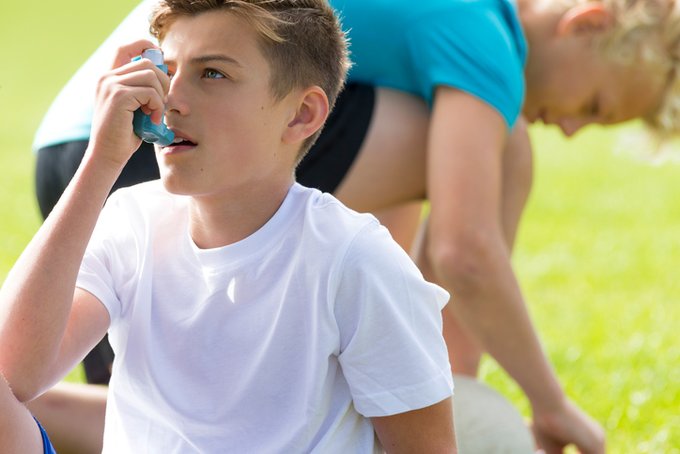
¿Cuáles son los signos de un ataque de asma y por qué es importante conocerlos? Aquí lo que debes saber ow.ly/Odff50yJPIh

Imagen

NIH Reports First Known Employee with COVID-19 Infection | National Institutes of Health (NIH)

NIH Reports First Known Employee with COVID-19 Infection | National Institutes of Health (NIH)

National Institutes of Health (NIH) - Turning Discovery into Health

Institute/Center

Contact


NIH Reports First Known Employee with COVID-19 Infection

NIH informed its staff early this morning that it has its first known case of an NIH staff member who has tested positive for COVID-19, the disease caused by the SARS-CoV-2 coronavirus. NIH has reported the case to state and local public health officials. While this is an unfortunate development, it is not surprising, and NIH expects that there will be more cases of infection among NIH staff.
The individual works for the National Institute of Arthritis and Musculoskeletal and Skin Diseases but is not involved in patient care. The individual is quarantined at home and doing well. Importantly, the individual was asymptomatic while at work, which is believed to lower the risk of transmission. After developing symptoms, the individual took the appropriate action, stayed home and called the NIH Occupational Medical Service (OMS), which is managing potential COVID-19 infection among NIH staff. OMS arranged testing, and the result was positive. NIH commends the infected individual for following the NIH guidance, which has allowed us to take swift action.
OMS and the NIH Clinical Center Hospital Epidemiology Service have identified staff who work in close proximity to this individual and may have been exposed. Those individuals have been contacted and will be screened for symptoms as soon as possible and asked to self-quarantine at home if their exposure constitutes a significant risk of infection according to Centers for Disease Control and Prevention (CDC) guidelines. OMS will monitor them closely for infection.
NIH will handle each case with the utmost respect to privacy while also informing potentially affected staff and taking swift measures to mitigate spread of the virus. NIH is reminding staff to follow the CDC guidance about COVID-19 to prevent illness and recognize symptoms.
About the National Institutes of Health (NIH): NIH, the nation's medical research agency, includes 27 Institutes and Centers and is a component of the U.S. Department of Health and Human Services. NIH is the primary federal agency conducting and supporting basic, clinical, and translational medical research, and is investigating the causes, treatments, and cures for both common and rare diseases. For more information about NIH and its programs, visit www.nih.gov.
NIH…Turning Discovery Into Health®
Coronavirus Disease 2019 (COVID-19) in the U.S. | CDC

Coronavirus Disease 2019 (COVID-19) in the U.S. | CDC


Coronavirus Disease 2019 (COVID-19) in the U.S.

Updated March 13, 2020
This page will be updated regularly at noon Mondays through Fridays. Numbers close out at 4 p.m. the day before reporting.
CDC is responding to an outbreak of respiratory illness caused by a novel (new) coronavirus. The outbreak first started in Wuhan, China, but cases have been identified in a growing number of other locations internationally, including the United States. In addition to CDC, many public health laboratories are now testing for the virus that causes COVID-19.
COVID-19: U.S. at a Glance*
  • Total cases: 1,629
  • Total deaths: 41
  • Jurisdictions reporting cases: 47 (46 states and District of Columbia)
* Data include both confirmed and presumptive positive cases of COVID-19 reported to CDC or tested at CDC since January 21, 2020, with the exception of testing results for persons repatriated to the United States from Wuhan, China and Japan. State and local public health departments are now testing and publicly reporting their cases. In the event of a discrepancy between CDC cases and cases reported by state and local public health officials, data reported by states should be considered the most up to date.
Cases of COVID-19 Reported in the US, by Source of Exposure*†
Cases of COVID-19 Reported in the US, by Source of Exposure
Travel-related138
Close contact129
Under investigation1,362
Total cases1,629
* Data include both confirmed and presumptive positive cases of COVID-19 reported to CDC or tested at CDC since January 21, 2020, with the exception of testing results for persons repatriated to the United States from Wuhan, China and Japan. State and local public health departments are now testing and publicly reporting their cases. In the event of a discrepancy between CDC cases and cases reported by state and local public health officials, data reported by states should be considered the most up to date.
† CDC is no longer reporting the number of persons under investigation (PUIs) that have been tested, as well as PUIs that have tested negative. Now that states are testing and reporting their own results, CDC’s numbers are not representative of all testing being done nationwide. 
States Reporting Cases of COVID-19 to CDC*
* Data include both confirmed and presumptive positive cases of COVID-19 reported to CDC or tested at CDC since January 21, 2020, with the exception of testing results for persons repatriated to the United States from Wuhan, China and Japan. State and local public health departments are now testing and publicly reporting their cases. In the event of a discrepancy between CDC cases and cases reported by state and local public health officials, data reported by states should be considered the most up to date.
COVID-19: Cases among Persons Repatriated to the United States
COVID-19: Cases among Persons Repatriated to the United States†
Positive
Wuhan, China3
Diamond Princess Cruise Ship46
 Cases have laboratory confirmation and may or may not have been symptomatic.

COVID-19 cases in the United States by date of illness onset, January 12, 2020, to March 12, 2020, at 4pm ET (n=792)**

** Does not include cases among persons repatriated to the United States from Wuhan, China and Japan; does not include U.S.-identified cases where the date of illness onset has not yet been reported.

Details - Public Health Image Library(PHIL)

Details - Public Health Image Library(PHIL)


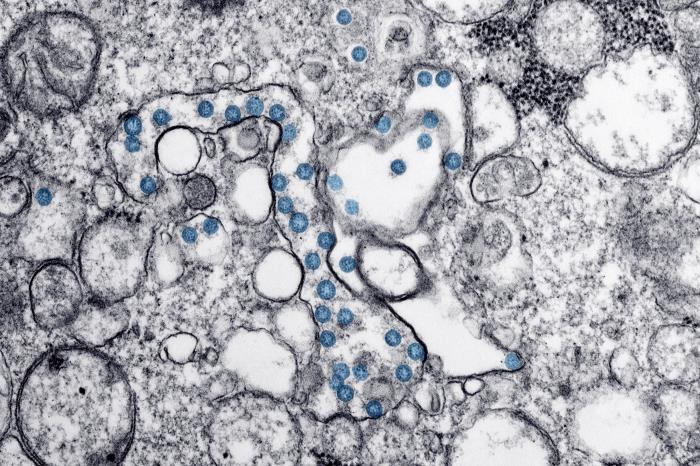
Transmission electron microscopic image of an isolate from the first U.S. case of COVID-19, formerly known as 2019-nCoV. The spherical viral particles, colorized blue, contain cross-sections through the viral genome, seen as black dots.

Flood Safety Tips

Flood Safety Tips


Flood Safety Tips

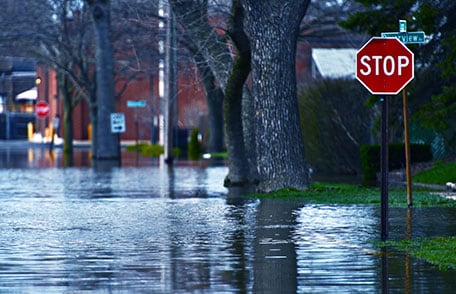
Street signs on flooded street
Each year, more deaths occur due to flooding than any other hazard related to thunderstorms. The most common flood deaths occur when a vehicle is driven into hazardous floodwater. Fortunately, you can take steps to protect yourself, your family, and your home.

During a Flood Watch or Warning

  • Gather emergency supplies.
  • Listen to your local radio or television station for updates.
  • Have immunization records handy (or know the year of your last tetanus shot).
    • Store immunization records in a waterproof container.
  • Prepare an emergency food and water supply. Store at least 1 gallon of water per day for each person and each pet. Store at least a 3-day supply.
  • Bring in outdoor possessions (lawn furniture, grills, trash cans) or tie them down securely.
  • If evacuation appears necessary: turn off all utilities at the main power switch and close the main gas valve.
  • Leave areas subject to flooding: low spots, canyons, washes, etc. (Remember: avoid driving through flooded areas and standing water.)
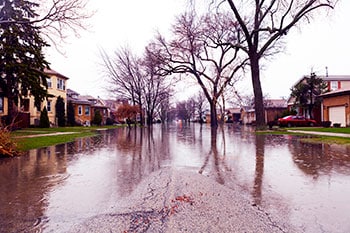
Flooded street
After you return home, if you find that your home was flooded, practice safe cleaning.

After Flooding Occurs

  • Avoid driving through flooded areas and standing water. As little as six inches of water can cause you to lose control of your vehicle.
  • Do not drink flood water, or use it to wash dishes, brush teeth, or wash/prepare food. Drink clean, safe water.
  • If you evacuated: return to your home only after local authorities have said it is safe to do so.
  • Listen to water advisory from local authorities to find out if your water is safe for drinking and bathing.
    • During a water advisory, use only bottled, boiled, or treated water for drinking, cooking, etc.
  • When in doubt, throw it out! Throw away any food and bottled water that comes/may have come into contact with floodwater.
  • Prevent carbon monoxide (CO) poisoning. Use generators at least 20 feet from any doors, windows, or vents. If you use a pressure washer, be sure to keep the engine outdoors and 20 feet from windows, doors, or vents as well.
The initial damage caused by a flood is not the only risk. Standing floodwater can also spread infectious diseases, bring chemical hazards, and cause injuries.
After you return home, if you find that your home was flooded, practice safe cleaning. Remove and throw out drywall and insulation that was contaminated with floodwater or sewage. Throw out items that cannot be washed and cleaned with a bleach solution: mattresses, pillows, carpeting, carpet padding, and stuffed toys. Homeowners may want to temporarily store items outside of the home until insurance claims can be filed. See recommendations by the Federal Emergency Management Agency (FEMA)external icon.
Clean walls, hard-surfaced floors, and other household surfaces with soap and water and disinfect with a solution of one cup of bleach to five gallons of water.

During Travel Tips | Travelers' Health | CDC

During Travel Tips | Travelers' Health | CDC


8 Ways to Prevent Sickness or Injury During Travel

woman on bridge looking at map
Once your trip has started, you want to be able to enjoy it! Getting sick or injured can quickly derail your fun. Keep your journey on track by following these travel tips.

#1 Be considerate of other people’s health. If you are sick, do NOT travel.

  • Handwashing is one of the best ways to protect yourself & your family from getting sick. Wash your hands with soap and water often, especially before eating.
  • If soap and water aren’t available, clean hands with hand sanitizer containing at least 60% alcohol.
  • Don’t touch your eyes, nose, or mouth. If you need to touch your face, make sure your hands are clean.
  • Cover your mouth and nose with a tissue or your sleeve (not your hands) when coughing or sneezing.
  • Try to avoid contact with people who are sick.
  • If you are sick, stay home or in your hotel room, unless you need medical care.

#2 Road accidents

Accidents are the number one cause of injury and death among Americans while traveling.
  • Always wear a seat belt and, don’t ride in vehicles that do not have them.
  • When possible, hire a local driver. Ask your hotel for a trustworthy driver or taxi company.
  • Do not ride with a driver who has been drinking.
  • Do not drink and drive.
  • Do not travel on overloaded buses or minibuses.
  • Avoid traveling at night.
  • Try to travel with others, not alone.

#3 Prevent bug bites

Bugs, including mosquitoes, ticks, fleas, and some flies, can spread diseases such as malaria, yellow fever, Zika, dengue, chikungunya, and Lyme disease, all of which can have severe and lasting consequences.
  • Use EPA-registered insect repellents with one of the following active ingredients: DEET, picaridin, IR3535, oil of lemon eucalyptus (OLE), para-menthane-diol (PMD), or 2-undecanone. Find an EPA-registered insect repellent that’s right for you.
  • Wear long-sleeved shirts and long pants when outdoors.
  • You can also spray clothing with permethrin or another EPA-registered insecticide for greater protection. Do NOT use permethrin on skin.
  • If you can, stay in hotels or resorts that are well screened or air-conditioned.

#4 Avoid infections

Infections are transmitted by blood or body fluids, such as viral hepatitis and HIV.
  • Always avoid close contact with sick people.
  • Wash your hands often with soap and water. If soap and water are not available, use a 60% or greater alcohol-based hand sanitizer.
  • Always use condoms if you have sex, to reduce the risk of HIV and other sexually transmitted diseases.
  • Avoid getting tattoos or piercings abroad. If they do get them, make sure the facility is not re-using needles.
  • If you need injections or medical procedure abroad make sure the facility is using sterile equipment and check with the embassy if they need a recommendation for where to go.
  • If you are planning a trip for a medical procedure, check out our medical tourism webpage.

#5 Food and Drinking Water Safety

  • Eat only food that has been fully cooked and served hot.
  • Do not eat fresh vegetables or fruits unless you can wash or peel them yourself.
  • Drink only bottled, sealed beverages, and avoid ice—it was likely made with tap water.

#6 Be Safe Around Animals

  • Avoid animal bites by not handling or petting animals, including dogs and cats.
  • If you are bitten, scratched, or licked, wash the area immediately with soap and water.
  • Call a doctor and determine if medication or rabies post-exposure vaccinations are needed, or if you need to update your tetanus shot.

#7 Sun Safety

  • Use sunscreen with both UVA and UVB protection.
  • Always apply sunscreen BEFORE insect repellent.

#8 Physical Safety

  • Follow local laws and customs.
  • Limit alcohol intake.
  • Wear protective gear during adventure activities (helmets for biking, rappelling, etc.)
  • Use caution when swimming or visiting bodies of water.
    • Do not swim in fresh water.
    • Keep feet clean and dry, and do not go barefoot, especially on beaches where there may be animal waste.
    • Be aware of local weather conditions and forecasts.
    • Watch for large waves, strong tides, and signs of rip currents.
    • Children should be supervised by an adult at all times near and in water.

What to Do if You Become Sick or Injured During Your Trip

If you become sick on an airplane

  • Tell a crew member immediately.
  • If you are coughing, you may be asked to wear a face mask or to cover your mouth and nose.
  • If your illness is serious, the crew may move you to a different part of the plane or, if necessary, redirect the airplane and arrange for you to exit at the nearest airport to receive medical care.

If you become sick on a cruise ship

  • Tell a crew member immediately.
  • Cruise ships usually have a small medical facility on board. Your illness may be treated in this facility.
  • If your illness is serious, the medical staff may stabilize your condition and move you to a hospital on land for further treatment.
  • See CDC’s Tips for Healthy Cruising.

Once at your destination

  • See a doctor immediately if you feel seriously ill or are injured.
  • Obtaining Health Care Abroad provides information and resources to find a doctor.
  • If you bought evacuation insurance, the insurance company also will be able to advise you.
  • Contact the local US embassy or consulate if you think you may need assistance. They are available 24/7 with emergency assistance for US citizens.
  • Reasons you may need to see a doctor
    • Are showing signs of illness (fever >100.4°F [38°C], diarrhea, cough or difficulty breathing, etc.)
    • Have visited a malaria-risk area and become sick with a fever or flu-like illness
    • Have been bitten, scratched, or licked by an animal
    • Have been in any road accident
    • Have been injured
    • Have been sexually assaulted

If You Are Involved in a Natural Disaster

Some areas are prone to certain natural disasters, such as earthquakes, hurricanes, or tsunamis. To find out if your destination is at risk for certain natural disasters, see the US Department of State Country-specific Information Pages.

Venous Thromboembolism (Blood Clots) and Cancer | CDC

Venous Thromboembolism (Blood Clots) and Cancer | CDC


Venous Thromboembolism (Blood Clots) and Cancer

If you are currently being treated for cancer, it is important to know that you are at increased risk for developing a blood clot. The good news, though, is blood clots may be preventable and treated if discovered early.
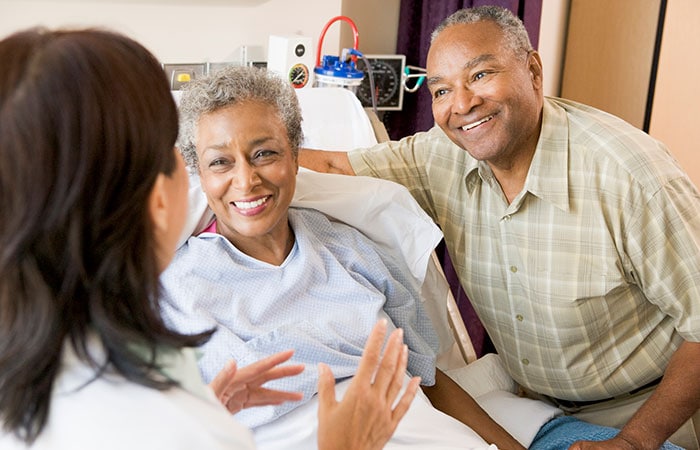
A doctor talking with a senior couple
While everyone is at risk for developing a blood clot (also called venous thromboembolism or VTE), having cancer and some of its treatments increase the risk for a blood clot. Learn other interesting facts about blood clots below.

Why Are People with Cancer at Risk for Developing a Blood Clot?

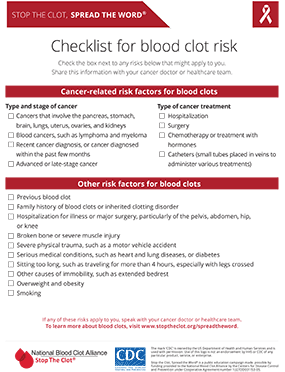
  • Some cancers pose a greater risk for blood clots, including cancers involving the pancreas, stomach, brain, lungs, uterus, ovaries, and kidneys. Certain blood cancers, such as lymphoma and myeloma, also increase risk.
  • Treatments for these cancers involving hospitalization, surgery, chemotherapy, hormonal therapy, and catheters (small tubes placed in veins to administer treatments) may also increase your risk for blood clots.
Several other factors may also increase the risk for a blood clot in a person being treated for cancer, such as
  • A previous blood clot
  • Family history of blood clots or inherited clotting disorder
  • Hospitalization for illness or major surgery, particularly those involving the pelvis, abdomen, hip, or knee
  • Broken bone or severe muscle injury
  • Severe physical trauma, such as a motor vehicle accident
  • Serious medical conditions, such as heart and lung diseases or diabetes
  • Sitting too long, such as traveling for more than 4 hours, especially with legs crossed
  • Other causes of immobility, such as extended bedrest
  • Being overweight or having obesity
  • Smoking

Take Steps to Protect Yourself from Blood Clots During Your Cancer Treatment

  • Know the signs and symptoms of blood clots. Discuss your risks with your cancer doctor.
    • A blood clot occurring in the legs or arms is called deep vein thrombosis (DVT). Signs and symptoms of a DVT include
      • Swelling of the affected limb
      • Pain or tenderness not caused by injury
      • Skin that is warm to the touch, red, or discolored
If you have these signs or symptoms, alert your cancer doctor as soon as possible.
  • A blood clot in the legs or arms can break off and travel to the lungs. This is called a pulmonary embolism (PE), and can be life threatening. Signs and symptoms of a PE include
    • Difficulty breathing
    • Chest pain that worsens with a deep breath or cough
    • Coughing up blood
    • Faster than normal or irregular heartbeat
Seek immediate medical attention if you experience any of these signs or symptoms.
  • Talk with your cancer doctor and other healthcare providers about factors that might increase your risk for a blood clot. Let them know if you or anyone else in your family has ever had a blood clot.

CDC’s Work in Blood Clots and Cancer

Public Health Monitoring
In 2018, CDC funded the Association of University Centers on Disabilities (AUCD) to determine the number of people with cancer newly diagnosed with VTE in two U.S. populations:  1) Oklahoma County, Oklahoma and 2) three Duke-affiliated hospitals. AUCD provided funding to researchers at Duke University and the University of Oklahoma Health Science Center to evaluate, analyze, and share information on cancer-associated VTE in these populations. The findings of this project will provide valuable information about the burden of cancer-associated VTE in these populations, as well as how VTE is being identified and treated. Data from studies such as these are needed to improve health care outcomes for people with cancer.
Health Promotion and Education
Since 2014, CDC has funded the National Blood Clot Allianceexternal icon (NBCA) to increase general awareness of blood clots by working to develop educational materials on the public health issue of VTE. In 2019, new content has focused on the risk for blood clots among people with cancer for a digital public health education campaign called Stop the Clot, Spread the Word®external icon. This campaign was one of many CDC resources recognized in 2017 as an important asset in a collection of VTE educational resources published by The Joint Commission. pdf icon[PDF – 3.24 MB]external icon The Commission accredits and certifies nearly 21,000 healthcare organizations in the United States.
The campaign’s web portal provides people with lifesaving information about blood clots, including signs, symptoms, and prevention, as well as the factors that increase the risk for blood clots.
Please feel free to share the campaign’s educational resources with friends and family. The campaign’s digital content is provided in ways that make it easy for you to share with friends and family and across your social media networks. You can access these resources either from the campaign web portal or through the links provided below.

Campaign Video

This video shares important information about blood clot signs and symptoms, as well as the risk factors for blood clots for people who are being treated for cancer.

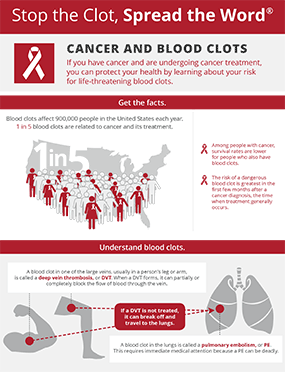
Campaign Infographic

This infographic shares important information about blood clot signs and symptoms, as well as the risk factors for blood clots in people who are being treated for cancer.

Campaign Checklists

Download these checklists to learn more about your risk for blood clots and how to guide a discussion with your cancer doctor.